
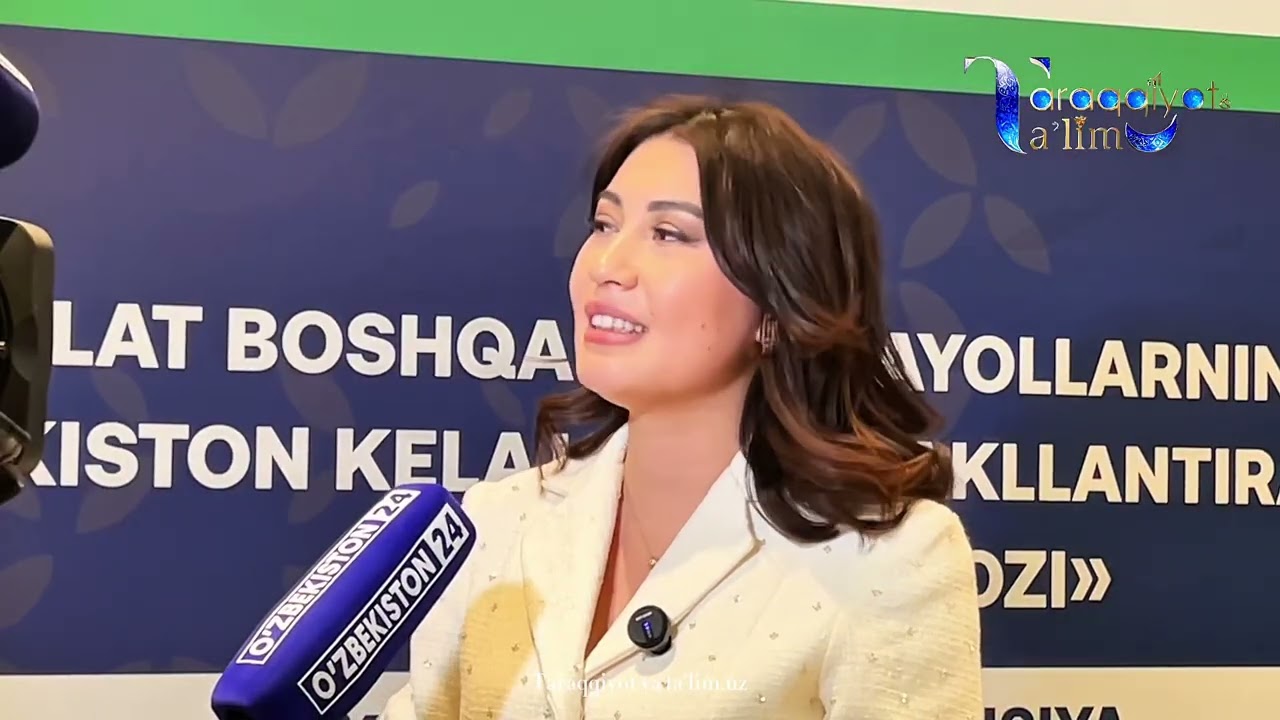
FASHION MARKETING TURNS UZBEKISTAN’S NATIONAL FASHION INDUSTRY INTO A NEW CULTURAL BRAND

Iyun 18, 2026 - 03:16
 0  12
FASHION MARKETING TURNS UZBEKISTAN’S NATIONAL FASHION INDUSTRY INTO A NEW CULTURAL BRAND

Uzbekistan’s fashion industry is entering a new stage, in which national fabrics, digital marketing, export ambitions, and young designers are coming together to reshape how the country presents itself to local and international consumers. For many years, Uzbekistan was known mainly as a supplier of cotton, yarn, and textile raw materials, but today that picture is changing. The sector is moving beyond raw materials and basic production toward finished garments, branded collections, fashion weeks, online sales, and cultural storytelling. In this new environment, fashion marketing is becoming just as important as design itself.

According to official data, Uzbekistan’s textile exports reached USD 2.6 billion at the end of 2025, with products shipped to 75 countries. Key trading partners include Russia, Türkiye, Belarus, Kyrgyzstan, Kazakhstan, China, Germany, and the United Arab Emirates. The government aims to raise the sector’s exports to USD 3.3 billion in 2026 and, over the coming years, to grow sales through e-commerce platforms from USD 700 million toward USD 1 billion. These figures show that the sector is no longer only about production capacity — it is also about market identity.

This is precisely where fashion marketing helps Uzbek brands explain what sets them apart: local craftsmanship, national patterns, natural fabrics, modest elegance, and the visual language of Central Asia. The country has a deep material culture expressed through cotton, silk, knitwear, embroidery, and traditional fabrics such as atlas and adras. Yet in modern fashion markets, quality fabric alone is not enough: consumers look for a story, a lifestyle, and a reason to choose one brand over another.

Through brand identity, social-media campaigns, influencer partnerships, runway shows, online stores, and export promotion, Uzbek fashion companies can turn traditional materials into modern consumer products. This shift is already visible in the numbers: in 2025, exports of finished textile products grew by 18.5 percent compared with 2024, the sector produced goods worth 134 trillion soums, and it employed more than 623,000 people. Finished products carry far more brand value than raw materials, which is why the sector’s future depends largely on the move from “made in Uzbekistan” to “designed in Uzbekistan.” A garment inspired by adras is no longer merely clothing; it can become a symbol of national identity.

Tashkent is increasingly becoming the main stage for Uzbekistan’s fashion image. Events such as Visa Fashion Week Tashkent give designers a platform to present their collections, attract the attention of audiences and the media, and connect local creativity with regional and global trends. The Pre-Fall 2025 season was held on 25–26 May at the InterContinental Tashkent, with Uzbek designers featured in the programme. Such events are not only cultural showcases but also marketing engines: a runway show generates photographs, videos, interviews, and brand narratives that are later used in online campaigns, export catalogues, and on e-commerce platforms.

For national fashion brands, digital marketing offers several advantages. First, it allows small and medium-sized designers to reach customers without opening expensive physical stores. Second, it helps them tell the story behind their products through short videos, lookbooks, and live streams. Third, it opens a channel to diaspora consumers and to foreign buyers interested in Central Asian design. A modern campaign can combine several elements: a model wearing an adras-style blazer on a Tashkent street, a short video explaining the meaning of the pattern, an interview with the designer, and a direct shopping link. This is how culture becomes commerce.

International buyers increasingly care about labour standards, sustainability, and supply-chain transparency. In this respect, Uzbekistan’s cotton sector has undergone major reforms: the International Labour Organization (ILO) confirmed that systemic forced labour and child labour had been eradicated from the 2021 cotton harvest onward. In 2022, the international boycott of Uzbek cotton was lifted, and the country gained tariff-free access to the European market. This matters for fashion marketing, because reputation is part of the product: a brand must present itself not only through beauty but also through responsibility. Ethical production, transparent sourcing, and sustainable cotton can become selling points for Uzbek brands, and the area cultivated under sustainable initiatives such as Better Cotton continues to expand.

Uzbekistan’s fashion marketing is also supported by major textile exhibitions. Regular events in Tashkent, such as CAITME and TextileExpo Uzbekistan, bring together factories, designers, technology suppliers, investors, and buyers. For brands, they provide access to better materials, modern equipment, and international partners; for marketers, they are a source of visibility and credibility.

Uzbekistan’s national fashion industry has a clear advantage: a visual identity that is already recognizable. Atlas, adras, suzani embroidery, gold-thread detailing, skullcap-inspired forms, and geometric ornaments can all be adapted to modern clothing. The key task is to use these elements with care, without reducing heritage to mere decoration. The strongest marketing strategy for Uzbekistan will be one that balances tradition and modernity: national fashion should be presented not as something old or museum-like, but as modern, youthful, elegant, modest, and export-ready.

The next stage will depend on how effectively designers, manufacturers, marketers, and policymakers work together. If Uzbekistan can connect its textile strength with strong branding, digital commerce, ethical production, and creative storytelling, its national fashion industry could become one of Central Asia’s most visible cultural exports.

Nargiza Alimkhodjaeva 

Marketing Department, Tashkent State University of Economics, Tashkent, Uzbekistan

nalimhodzaeva@gmail.com  |  ORCID: 0000-0002-1998-4869